
Hoops & Hues: Rethinking Public Spaces Through Art and Play
Watch the film here: Hoops & Hues
Summary
A reflection on how a small public space in Embu County reveals the power of sports, graffiti, and youth-led creativity to reshape Kenyan urban environments — inspired by the making of the short film Hoops & Hues.
Public spaces carry emotional weight. They host our gatherings, our play, our frustrations, and our creativity. Yet across many Kenyan towns, these spaces are often treated as functional rather than inspirational — as if their purpose ends at providing a field, a bench, or a walkway. But the reality on the ground, especially for young people, tells a different story. It is a story of improvisation, expression, and the quiet transformation of space through art.
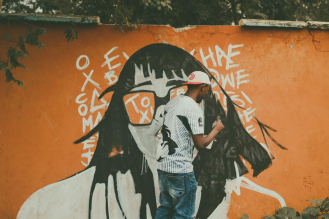
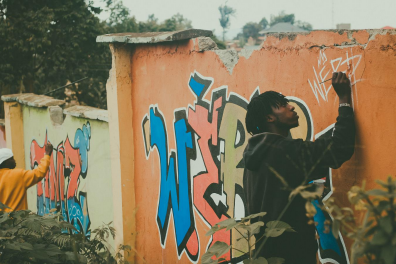
I recently completed making a short film titled Hoops & Hues, shot in a public space in Embu County. The location is modest: a community basketball court surrounded by blank, aging walls. But on one particular afternoon, those walls and that court became something much bigger. They became a canvas for graffiti, a backdrop for movement, and a stage for youth culture. What emerged was not just a film but a case study in how art and play can coexist — and how urban spaces can evolve when communities feel ownership over them.
Public Spaces as Shared Canvases
Urban planners often speak of public spaces as “shared assets,” but for many youth, they function more like shared canvases. In Embu, the graffiti artists who joined me on set were not decorating walls; they were leaving a signature of presence. Their work filled the space with colour and meaning, turning an ordinary corner into a visual conversation.
Graffiti in Kenya is often misunderstood, quickly labeled as vandalism when it appears outside institutional settings. But in this context, it did something powerful — it brought identity into the space. It invited curiosity. It signaled that the area was alive, that it had a pulse, that it belonged to someone.
Public art offers a form of “social lighting,” illuminating the values and voices of a community without needing permission or perfect conditions. The transformation was immediate: passersby paused. Some asked to take pictures. Others joined the basketball game. A space that was once predictable became layered, expressive, and welcoming.
Blending Sports and Creativity in Urban Environments
Sports infrastructure in Kenya is often under-invested, yet it plays one of the most critical roles in youth development. Basketball courts, football fields, and open grounds become informal hubs where friendships form, ideas are exchanged, and conflicts soften.
In Hoops & Hues, players shooting hoops next to artists painting murals produced a kind of spontaneous urban choreography. The constant movement — the bounce of the ball, the spray of the can, the rhythm of the background conversation — revealed how shared spaces can encourage both physical and creative expression.
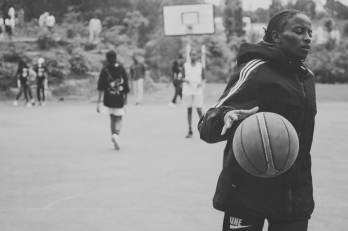
This blending is important for urban futures. African cities are growing younger and denser, and public spaces must do more than serve single functions. They must support multiple forms of interaction, culture, and belonging. The Embu court became an example of multifunctional place making — a principle increasingly central to sustainable urban development:
∙ A wall becomes a gallery.
∙ A court becomes a community centre.
∙ A gathering becomes a creative act.
Cities thrive when people feel invited to participate in shaping them.
Youth as Co-Creators of Urban Identity
One of the most important insights from filming Hoops & Hues was realizing how naturally youth take ownership of space when the environment feels safe and open. No formal program led the day. No institution sponsored it. It was young artists and athletes simply showing up, contributing their skills, and feeding off each other’s energy.
The Local Pathways Fellowship emphasizes youth empowerment and future-oriented thinking — and this small experience in Embu is a reminder that young people are not just beneficiaries of urban planning; they are co-creators. Their interventions, however informal, redefine space and challenge planners to think beyond traditional frameworks.
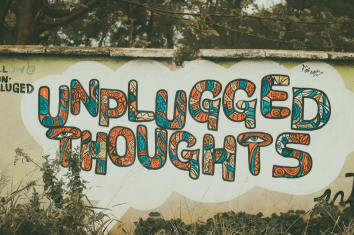
When youth interact with public spaces, they are not merely using them; they are shaping narratives, aesthetics, and identities. Cities that recognize and support this will unlock deeper social resilience and innovation.
Art as a Tool for Social Inclusion
Art in public spaces acts as an equalizer. It collapses boundaries between age groups, backgrounds, and interests. On filming day, children stopped to watch the artists, adults observed the basketball game, and strangers found themselves talking — not because an event was planned but because the space encouraged participation.
This type of organic interaction is one of the clearest indicators of an inclusive public environment. It affirms what many urban studies highlight: inclusive cities are not built solely through infrastructure but through experiences.
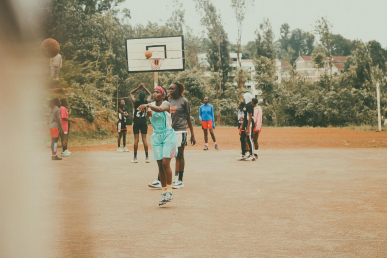
Public art and sports together create experiences that allow communities to see themselves reflected in their environment. When young people see their artwork publicly displayed, even temporarily, it affirms dignity, creativity, and a sense of belonging — essential components of social sustainability.
Why This Matters for Kenya’s Urban Future
Kenyan municipalities are actively developing integrated urban development plans, climate risk profiles, and public infrastructure frameworks. Yet, what often goes unaddressed is the cultural and emotional value of shared spaces.
The example from Embu invites a few future-oriented reflections:
∙ What if public spaces were intentionally designed to host multiple art forms? ∙ What if municipalities embraced graffiti as community expression instead of damage?
∙ What if youth-led creative initiatives were embedded into planning processes?
By integrating sports, art, and community narratives into public spaces, towns can create environments that support well-being, strengthen local identity, and inspire civic pride. These interventions require minimal resources but deliver outsized impact.
A Call to Reimagine Our Everyday Spaces
Hoops & Hues is a small film, but the experience behind it carries broader meaning. Public spaces can be more than physical infrastructure — they can be emotional, cultural, and creative ecosystems. They can tell stories. They can gather people. They can heal.
The future of our cities depends on how boldly we reimagine the ordinary. If a single court in Embu can become a canvas, a stage, and a meeting ground, then the potential across Kenya’s urban landscape is enormous.
All it requires is openness, community, and the courage to let colour and movement shape our shared spaces.
Author Bio
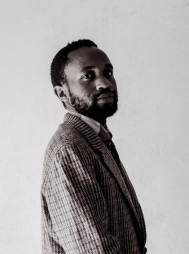
Ian Ngugi is an urban planner, photographer, and multidisciplinary artist from Kenya. His work explores the intersection of public space, youth culture, and creative expression. With experience in municipal planning, climate resilience projects, and visual storytelling, he is passionate about using art to rethink how communities interact with their environments. Ian is a 2025 Local Pathways Fellow and the founder of Pineapples and Concepts, a creative outfit focused on film, music, fashion, culture and photography.
Social media links
Links to the full film and the photo attachments